
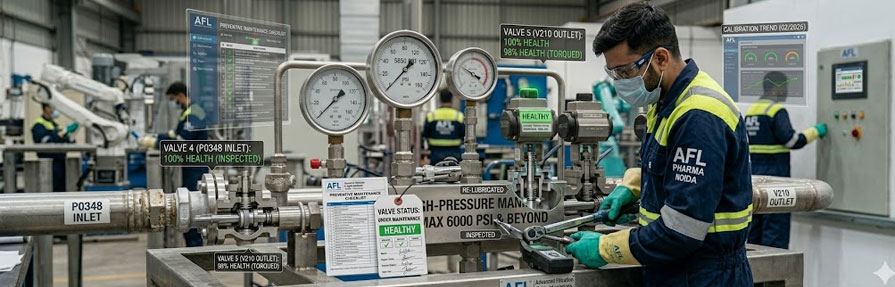
In heavy industries such as oil & gas, power generation, steel plants, cement manufacturing, and chemical processing, manifold valves operate under extreme pressure, temperature, and continuous duty cycles. These valves act as the critical interface between high-energy process lines and sensitive instrumentation devices.
Despite their importance, manifold valves often receive attention only after a failure occurs. Leakage, stem seizure, inaccurate readings, and unsafe maintenance conditions are common issues observed across industrial plants. Most of these failures are not sudden. They develop slowly due to poor maintenance practices and lack of inspection protocols.
In many plants, maintenance teams focus on pumps, compressors, and control valves but overlook manifold valves because they are considered “static components.” This assumption is dangerous. A single failed manifold valve can:
- Compromise measurement accuracy
- Expose technicians to live pressure
- Trigger false alarms
- Force unplanned shutdowns
Over time, this leads to increased downtime, safety incidents, and loss of process control.
Manifold valves are subjected to:
- Continuous pressure cycling
- Vibration
- Temperature variation
- Corrosive media
- Frequent operation during calibration
Without structured maintenance, seals degrade, stems wear out, and internal leakage develops.
Understanding best maintenance practices for manifold valves is essential for:
- Instrumentation engineers
- Maintenance supervisors
- Plant reliability teams
- Procurement managers
A disciplined maintenance approach not only extends valve life but also protects critical instruments and ensures long-term plant reliability.
What Is Manifold Valve Maintenance?
Manifold valve maintenance refers to the systematic inspection, cleaning, lubrication, testing, and replacement of critical components to ensure safe and reliable operation. It includes both preventive and corrective maintenance activities.
Proper maintenance ensures:
- Leak-free isolation
- Smooth valve operation
- Accurate calibration
- Safe depressurization
- Protection of instruments
Unlike process valves, manifold valves require precision handling because even minor leakage can affect measurement accuracy.
Why Maintenance Is Critical in Heavy Industries
Heavy industries operate 24/7 under harsh conditions. Any small failure quickly escalates into major production loss.
Poor manifold valve maintenance can result in:
- Pressure leakage
- False instrument readings
- Calibration errors
- Unsafe working conditions
- Regulatory non-compliance
For industries such as:
- Refineries
- Thermal power plants
- Steel manufacturing
- Fertilizer plants
- Petrochemical complexes
maintenance is not optional. It is part of operational risk management.
Well-maintained manifold valves:
Common Maintenance Issues Observed in Plants
Field audits across heavy industries commonly reveal:
- Stem packing leakage
- Hard-to-operate valves
- Corrosion on body
- Seized stems
- Improper venting
- Missing valve tags
A refinery maintenance team noticed drifting pressure readings. Investigation showed:
- Internal leakage in manifold valve
- No maintenance done for 3 years
- Packing dried and cracked
Result:
- False calibration
- Instrument damage
- Emergency shutdown
This could have been avoided with routine inspection.
Role of Manifold Valves in Plant Safety
Manifold valves are safety barriers. They allow technicians to:
- Isolate live pressure
- Vent safely
- Perform maintenance
- Avoid direct exposure
Poor maintenance directly increases accident risk.
Foundation for Reliable Maintenance Strategy
Effective maintenance depends on:
- Inspection frequency
- Spare part availability
- Proper tools
- Trained technicians
- Documentation
This foundation ensures manifold valves perform reliably throughout their service life.
Preventive Maintenance Practices for Manifold Valves
Preventive maintenance is the most effective way to avoid sudden manifold valve failures. Instead of waiting for leakage or seizure to occur, valves should be inspected at planned intervals based on operating conditions.
Key preventive practices include:
- Visual inspection for external leakage
- Checking stem operation smoothness
- Verifying packing gland tightness
- Inspecting vent and drain ports
- Ensuring valve handles are intact
During inspection, technicians should operate the valve through its full stroke to confirm there is no sticking or abnormal resistance. Any unusual torque requirement is an early sign of internal wear or corrosion.
Lubrication and Cleaning Procedures
Manifold valves operate in dusty, high-temperature, and corrosive environments. Over time, dirt accumulation and lack of lubrication cause stem seizure and packing wear.
Best practices include:
- Cleaning external surfaces regularly
- Applying manufacturer-approved lubricants
- Avoiding over-lubrication
- Removing rust or scale deposits
- Protecting valves from chemical splash
Lubrication should be done only on designated points. Random oil application can attract dust and worsen wear.
Packing and Seal Inspection
Packing is the most critical sealing element in a manifold valve. In heavy industries, packing degradation is a common cause of leakage.
Inspection guidelines:
- Check for visible seepage
- Monitor gland nut tightness
- Replace packing during shutdowns
- Use OEM-approved packing material
Never overtighten gland nuts. Excessive tightening damages packing and increases stem friction.
Calibration-Related Maintenance
Manifold valves are frequently operated during transmitter calibration. Improper handling during calibration is a major cause of internal damage.
Best practices during calibration:
- Follow standard operating sequence
- Never force valve handles
- Vent pressure slowly
- Confirm zero pressure before equalizing
- Close vent ports after use
Incorrect sequence can damage transmitter diaphragms and valve seats.
Common Maintenance Mistakes to Avoid
Field audits reveal recurring mistakes:
- Using wrong tools
- Over-tightening packing
- Skipping inspection schedules
- Ignoring minor leaks
- Mixing spare parts
These mistakes accelerate wear and cause premature valve failure.
Standardizing Maintenance Procedures Across Plants
Large plants operate hundreds of manifold valves. Without standard procedures, maintenance quality varies from technician to technician.
Standardization benefits:
- Consistent inspection quality
- Reduced human error
- Faster troubleshooting
- Improved safety compliance
Recommended actions:
- Create SOPs
- Train technicians
- Maintain maintenance logs
- Use approved spare parts
Maintenance Planning and Spare Parts Management
In heavy industries, manifold valve maintenance cannot be treated as a reactive task. It must be part of a structured reliability program. Plants should maintain a planned maintenance schedule based on:
- Operating pressure
- Temperature cycles
- Process media
- Frequency of valve operation
Spare parts management is equally critical. Waiting for parts after a failure leads to extended downtime and unsafe temporary repairs.
Best practices:
- Maintain minimum stock of packing sets
- Keep spare handles and stems
- Store parts in clean, dry conditions
- Use OEM-approved spares only
Buyer & Maintenance Checklist
Before finalizing maintenance procedures or selecting replacement manifold valves, teams should follow a structured checklist.
Checklist:
- Identify critical measurement loops
- Review valve service conditions
- Confirm material compatibility
- Check pressure rating
- Verify fire-safe requirement
- Ensure spare availability
- Review maintenance history
- Train maintenance staff
Frequently Asked Questions (Voice-Search Optimized)
How often should manifold valves be inspected?
Inspection frequency depends on service conditions, but quarterly checks are recommended for heavy industries.
Can manifold valves be repaired on site?
Minor packing replacement can be done on site. Major damage requires workshop repair.
What is the most common failure in manifold valves?
Packing leakage due to wear and poor lubrication.
Should packing be tightened regularly?
Only when leakage is observed. Over-tightening should be avoided.
Can poor maintenance affect instrument accuracy?
Yes, internal leakage directly affects pressure measurement.
Is documentation important for maintenance?
Yes, maintenance logs help track valve health and predict failures.
Call to Action – Technical Assistance
If you need support in:
- Selecting the right manifold valves
- Creating maintenance SOPs
- Training technicians
- Spares planning
Get in touch with our technical team:
Summary – Maintenance Protects Measurement
Manifold valves may appear simple, but their role in plant safety and measurement accuracy is critical. Poor maintenance leads to:
- Leakage
- Instrument damage
- Safety risk
- Unplanned shutdowns
By following structured maintenance practices, heavy industries can achieve:
In heavy industries, maintenance is not a cost.
It is risk prevention.