
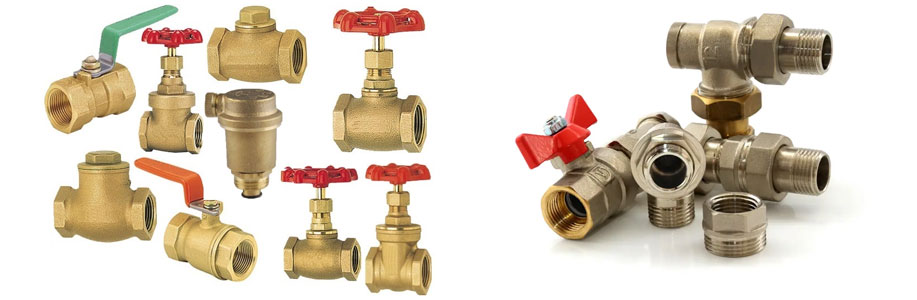
Brass valves are essential components in plumbing and industrial systems, known for their durability, versatility, and corrosion resistance. They play a crucial role in controlling the flow of liquids or gases within a system. These valves are predominantly made from a combination of copper and zinc, which gives them their characteristic golden hue. The composition of brass can be tailored to meet specific application requirements, allowing for variations in strength, machinability, and corrosion resistance.
Brass, being an alloy, offers a unique blend of properties. The addition of zinc enhances the material’s strength and hardness, making it well-suited for applications where structural integrity is vital. Additionally, brass maintains excellent machinability, allowing for intricate valve designs and precise manufacturing. Its inherent corrosion resistance makes it an ideal choice for environments where exposure to moisture or chemicals is expected.
Types of Brass Valves
Brass valves are versatile components widely used for controlling the flow of fluids in various industries. Two common types of brass valves are:
- Brass Ball Valves: Brass ball valves are characterized by a spherical disc within the valve body. This disc, known as the ball, has a hole through its centre that can be rotated to control the flow of fluid. When the hole aligns with the pipe, it allows flow; when turned perpendicular, it blocks flow. This design provides quick and reliable on/off control, making brass ball valves ideal for applications where precise control is essential. They are commonly used in residential plumbing, industrial processes, and HVAC systems.
- Brass Needle Valves: Brass needle valves feature a slender, pointed stem (the “needle”) which is used to precisely regulate the flow of fluids. By adjusting the position of the needle, operators can finely control the flow rate. These valves are particularly useful in applications with low flow requirements, where accurate control is crucial. They find extensive use in laboratories, instrumentation systems, and other situations where precise adjustments are necessary.
Both brass ball valves and brass needle valves leverage the unique properties of brass, including its corrosion resistance and durability, making them reliable choices for a range of applications. Understanding the specific function and requirements of a system is essential in determining which type of brass valve is most suitable for a given application.
Choosing the Right Brass Valve
Selecting the appropriate brass valve is crucial to ensure optimal performance and longevity within a system. This process involves careful consideration of various factors to guarantee compatibility and effectiveness.
Factors to Consider When Selecting Brass Valves
Before finalizing a brass valve choice, several critical factors must be taken into account. These include the type of application the valve will serve, the specific function it will perform (such as shut-off, regulation, or control), and the operating conditions it will face, including temperature and pressure. Additionally, compatibility with other materials in the system and potential exposure to corrosive elements should be thoroughly assessed. Furthermore, ease of installation and maintenance requirements, as well as adherence to industry-specific standards and regulations, must be taken into consideration. Thoughtful evaluation of these elements is key to making an informed decision.
Sizing and Dimensional Considerations for Brass Valves
Accurate sizing and dimensional considerations are critical to ensure a seamless integration of brass valves within a system. This involves meticulous attention to parameters such as outer diameter, inner diameter, thread size, and overall length. A precise fit not only guarantees optimal performance but also minimizes the risk of leaks or inefficiencies. It is imperative to refer to manufacturer specifications and industry standards to ascertain the correct sizing for the specific application.
Where to Source High-Quality Stainless Steel Fittings
Pioneer Industries Manufacture a Wide Variety of Brass Valves: Pioneer Industries is a distinguished manufacturer known for producing a diverse range of high-quality Brass Valves. With a focus on precision engineering and adherence to industry standards, Pioneer Industries has established itself as a trusted source for valves designed to meet the demands of various applications. Contact Us Today!