
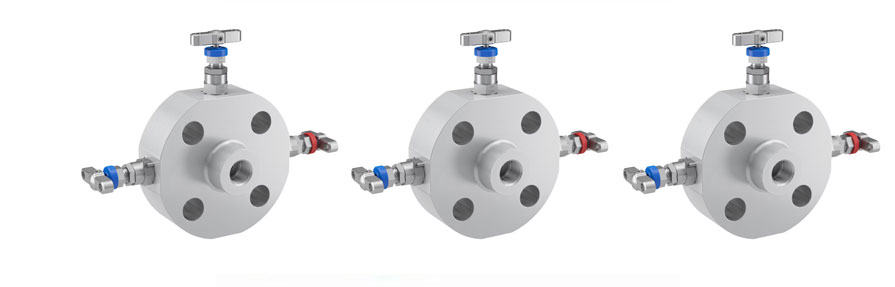
In the offshore oil and gas industry, safety and efficiency are paramount. Equipment must be compact, durable, and reliable to withstand extreme environmental conditions. Monoflange valves have revolutionized offshore operations by combining multiple valve functions into a single, space-saving unit, reducing leak points and enhancing system integrity.
These valves play a critical role in process instrumentation, chemical injection, wellhead operations, and pipeline isolation, ensuring seamless performance in high-pressure environments. This guide will explore the features, applications, and benefits of Monoflange valves and why they are the preferred choice for offshore industries.
What is a Monoflange Valve?
A Monoflange valve is a compact, single-piece double block and bleed (DBB) system designed to replace traditional multi-valve assemblies. It integrates primary isolation, secondary isolation, and a bleed valve, reducing weight, installation time, and potential leak points.
Key Features of Monoflange Valves
Types of Monoflange Valves
Different types of Monoflange valves are designed for specific offshore applications:
- Standard DBB Monoflange
- Features two isolation valves and a bleed valve.
- Commonly used for instrumentation and process control.
- High-Pressure DBB Monoflange
- Designed for high-pressure environments in offshore drilling and refining.
- Ensures secure isolation and bleeding in extreme pressure conditions.
- Subsea DBB Monoflange
- Built for underwater applications in offshore oil extraction.
- Made from corrosion-resistant alloys to withstand harsh subsea conditions.
- Single Block and Bleed Monoflange
- A more compact alternative with one isolation valve and a bleed valve.
- Ideal for limited-space installations in offshore rigs.
Applications of Monoflange Valves in Offshore Systems
Monoflange valves are widely used in offshore oil and gas operations for:
- Wellhead & Pipeline Isolation
- Provides safe isolation for wellheads, preventing contamination and pressure surges.
- Used for emergency shutdown (ESD) systems.
- Process Instrumentation
- Mounted on pressure gauges, flow meters, and sensors to ensure accurate measurement.
- Used in temperature and pressure control systems.
- Chemical Injection Systems
- Allows safe and precise injection of corrosion inhibitors, surfactants, and other chemicals.
- Prevents blockages in pipelines by controlling chemical dosing.
- Sampling & Calibration
- Enables the extraction of process samples without disturbing the main flow.
- Used in calibration and testing of pressure instruments.
Why Monoflange Valves are Essential for Offshore Safety & Efficiency
- Fewer leak points compared to traditional multi-valve systems.
- Complies with fire-safe and fugitive emission standards.
- Up to 70% shorter than conventional DBB systems.
- Reduces stress on pipelines and minimizes structural loads.
- Available in stainless steel, duplex steel, Hastelloy®, Monel®, Inconel®.
- Withstands high salinity and harsh marine environments.
- Lower labor costs due to simplified installation.
- Easy to maintain and replace, minimizing downtime.
- Operates at temperatures up to 538°C (1000°F).
- Handles pressures up to 10,000 psi, suitable for deep-sea drilling.
How to Select the Right Monoflange Valve for Offshore Use
When choosing a Monoflange valve, consider:
- Operating Pressure & Temperature – Ensure the valve meets offshore specifications.
- Material Selection – Choose corrosion-resistant materials like SS316, Duplex, Inconel.
- Installation Space – Opt for compact designs if space is limited.
- Compliance Standards – Ensure the valve meets API 6A, ASME B16.34, and NACE MR0175.
💡 Looking for high-quality Monoflange valves? Check out Pioneer Fitting for premium-grade industrial solutions.
Frequently Asked Questions (FAQs)
1. What is the main purpose of a Monoflange valve?
A Monoflange valve is used for fluid isolation, pressure control, and leak prevention in offshore systems, replacing multiple valves with a compact, single-unit design.
2. How does a Monoflange valve improve safety in offshore applications?
It reduces the number of leak points, enhances pressure control, and ensures safe isolation, making it ideal for critical offshore operations.
3. What industries use Monoflange valves?
They are widely used in:
- Offshore oil & gas
- Petrochemical refineries
- Chemical processing plants
- Power generation facilities
4. What materials are Monoflange valves made from?
Common materials include:
- Stainless Steel (SS316L, SS304L)
- Duplex & Super Duplex Steel
- Hastelloy®, Monel®, Inconel®
- Titanium for extreme corrosion resistance
- Where can I buy high-quality Monoflange valves?
You can purchase premium Monoflange valves from Pioneer Fitting, a trusted manufacturer and supplier in Mumbai, India.
Conclusion: Why Choose Monoflange Valves for Offshore Operations?
🚀 Monoflange valves have transformed offshore safety and efficiency by offering a compact, leak-free, and high-performance solution. Their ability to reduce weight, improve reliability, and meet stringent industry standards makes them the preferred choice for offshore oil & gas applications.
For best-in-class Monoflange valves, check out Pioneer Fitting – a leading manufacturer, supplier, and exporter in Mumbai, India.